

The Invisible Conveyor Belt Beneath the Ogmore
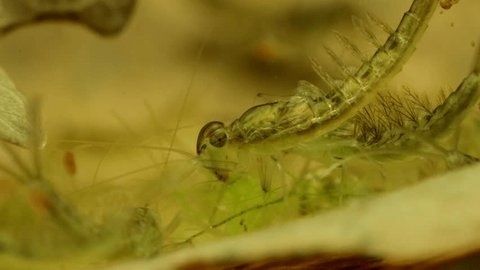
As evening settles across South Wales, the River Ogmore changes character. Light withdraws from the gravel beds, limestone riffles lose their surface sparkle, and the shallow margins become difficult to read from the bank. Beneath that darkening surface, however, the river is becoming busier. Mayfly nymphs, caddisflies, stone-dwelling larvae and other aquatic invertebrates begin to move, some deliberately leaving the bed to enter the current and others responding to a small change in flow or footing.
This movement is known as macroinvertebrate drift. It is not simply a collection of helpless insects being washed downstream. For many species, entering the current is a calculated dispersal strategy that balances the benefits of finding new habitat against the danger of being exposed to fish. Research on invertebrate drift has shown that light, flow, temperature and local river structure can establish recurring windows of movement. Those windows matter to the Ogmore’s wild brown trout, which can shift from daytime shelter to carefully chosen feeding stations as the supply of drifting prey increases.
Mechanics of the Drift and Environmental Signals
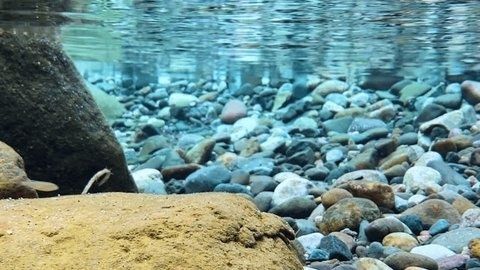
An aquatic nymph living among stones is exposed to a moving environment, but it is not without control. Many species use hooks, claws, silken threads or flattened bodies to maintain their position on the bed. Before releasing that grip, an insect may respond to current velocity, the pressure of passing water and the availability of suitable habitat downstream. The decision can be brief, yet its consequences are significant. A successful drift may carry the insect to a productive new patch of gravel, while an unsuccessful one may place it directly in the path of a trout.
Ecologists generally distinguish between behavioural drift and catastrophic drift. Behavioural drift follows a recurring biological rhythm and often involves healthy insects leaving the substrate under particular light or flow conditions. Catastrophic drift follows disturbance, such as a sudden rise in discharge, bed movement or a local hydraulic change that tears organisms from their attachments. The two forms can overlap. A modest rainfall pulse may increase natural movement without turning the Ogmore into a turbid, unstable spate, while a severe flood can dislodge large numbers of insects indiscriminately.
Mayfly nymphs are important participants in this system. Their aquatic stage may last weeks, months or, for some species, considerably longer, allowing them to form a substantial part of the food web before the short adult phase begins. Caddisflies also contribute, including pupae that leave their cases and drift as they prepare to emerge. A drifting caddis pupa may remain below the surface for a meaningful distance, which is why naturalists and anglers should examine the water column rather than looking only for adult insects above it.
- Mayfly nymphs often occupy stones, gravel and plant-covered margins, with movement influenced by light and current.
- Caddisfly larvae and pupae use the bed for shelter but can become important drifting prey during emergence or hydraulic disturbance.
- Dipteran larvae and pupae may enter the drift in fine seams and slower margins, especially where organic matter accumulates.
- Terrestrial insects add a separate food pulse when wind, rain or overhanging vegetation delivers them to the river.
The result is a layered conveyor belt rather than a uniform downstream wash. Riffle crests, boulder shoulders, pool heads and foam lines all concentrate prey differently. A riverbank observer who watches for these small contrasts can often understand where predators are likely to be positioned before seeing a single rise.
The Twilight Trigger and Lunar Clockwork
Drift density commonly rises sharply around dusk, with some observations recording the strongest crepuscular increase within roughly ninety minutes of sunset. The change is not necessarily dramatic to the eye. A few insects moving through a narrow current tongue may be more valuable to a trout than a larger but scattered daytime supply. As the sky dims, vulnerable benthic animals can move with less exposure to visual predators, while trout gain an advantage from their own ability to detect movement and contrast in low light.
Night-time conditions do not produce an identical response every evening. A study of brown trout and drifting macroinvertebrates in Belgium’s Aisne stream found that trout were often more active at night, dusk and dawn, when drift rates were elevated, but individual fish and dates differed considerably. On some occasions, trout appeared to respond to the total number of drifting organisms. On others, their activity was more closely associated with larger prey, including terrestrial insects and adult mayflies, flies and caddisflies. The findings are a useful warning against treating every river as a fixed timetable.
Moonlight adds another layer to the pattern. Bright lunar illumination can suppress the movement of some benthic fauna, encouraging insects to remain beneath stones or in the darker underside of the bed. A full moon evening may therefore produce a less obvious surface response than a heavily overcast night, even when discharge and temperature are similar. On a pitch-black evening, the river may carry a concentrated pulse that is almost invisible from the bank. Under a bright moon, drift may be delayed, reduced or redistributed toward shaded edges and deeper seams.
| River condition | Likely ecological signal | What to watch for |
|---|---|---|
| Clear evening with fading light | Crepuscular increase in drift | Trout moving from cover to pool heads and current seams |
| Bright full moon | Some insects remain under stones longer | Feeding concentrated in shade, bankside cover or deeper water |
| Overcast, moonless night | Greater security for drifting insects | Short, intense feeding windows and subtle surface movement |
| Rapidly rising flow | Possible mixture of behavioural and catastrophic drift | Dislodged material, changing clarity and fish relocation |
For field observers, the practical lesson is to record the whole evening rather than assigning a single label such as hatch or no hatch. Note the cloud cover, moon, water level, clarity and exact time of the first visible insect movement. Repeated observations can reveal a local rhythm that broad generalisations cannot.
Predatory Energetics and Trout Station Selection
The familiar description of trout as lazy is misleading. A wild brown trout is not seeking stillness for its own sake; it is balancing food intake against the energy required to hold position and capture prey. Fast water can be worthwhile when it carries abundant, high-value insects, particularly if rocks and uneven bed contours create slower pockets close to the substrate. The apparent speed at the surface can therefore conceal a relatively affordable holding station below.
This principle is central to optimal foraging in running water. A trout evaluates the energetic cost of resisting current, the probability of intercepting prey and the energy gained from each successful capture. A large caddis pupa or terrestrial insect can justify a short move into faster flow, while a sparse supply of tiny prey may favour a slower bank seam. Brown trout often show a conservative tendency, using banks, undercut edges and lower-cost water, but that does not prevent them from exploiting a rich riffle when the delivery rate is high.
Long-term research on drift invertebrates and salmonids across river systems, including the USGS drift synthesis, helps explain why position matters as much as prey abundance. A trout does not need to occupy the fastest water to benefit from it. The best lie may sit at the head of a pool, beside a boulder, below a riffle crest or along a foam line where several current lanes deliver insects into a narrow interception zone.
- Locate the delivery lane. Look for the seam where fast riffle water meets slower pool water, especially where bubbles or leaves reveal the current.
- Identify the holding pocket. Check for depth, rock shelter, a depression in the bed or a bank edge that reduces the cost of maintaining position.
- Compare food value with current cost. Larger insects and a dense drift can draw fish into faster water, while sparse or tiny prey usually favour calmer lies.
- Allow for changing light. As dusk deepens, trout may leave daytime refugia and move only a short distance to reach a more productive intercept point.
Energy expenditure is best understood comparatively rather than through a single universal calculation. A trout holding in a turbulent riffle must constantly correct its position, while a fish beneath a foam line may intercept prey with less muscular effort. Yet the riffle may deliver several times more food. The profitable station is the one with the strongest net return, and that station can change within minutes as light, discharge and insect abundance shift.
Reading Flow Pulses and Spate Windows on the River
Rainfall does not always arrive as a destructive flood. A minor pulse can lift the Ogmore enough to disturb loose material, wash terrestrial insects from vegetation and release hydropsychid larvae from exposed surfaces, while leaving the water sufficiently clear for trout to feed. These short windows are worth watching after unsettled weather, particularly when the river is rising but the bed remains visible in shallower water.
Conditions must be judged locally. Gauge readings provide a useful indication of changing discharge, but they do not replace observation along the South Wales catchment corridors. A tributary may respond before the main channel, and a rainfall cell can affect one valley more strongly than another. Check the latest official river information before approaching the bank, then assess colour, floating debris, velocity and access conditions on site. Never enter a swollen channel to inspect it, and keep away from undercut banks, slippery limestone and newly flooded paths.
Water quality is also part of the river’s ecological story. Natural Resources Wales is investigating pollution across the Ogmore catchment as part of work connected with Ogmore-by-Sea and Watch House Bay. The project has identified issues including blocked sewers, a drainage misconnection and sewer defects, while further monitoring and source tracing continue into 2027. This context matters because a river can show active drift and feeding while still facing pressures that require sustained catchment management.
- Water clarity: note whether the bed is visible at shallow depth and whether cloudiness is increasing.
- Discharge trend: a steady rise, falling level or sudden spike can produce very different drift responses.
- Riverfly groups: record mayflies, caddisflies, stoneflies and freshwater shrimp where identification skills allow.
- Habitat condition: look for stable gravels, varied flow, clean stones and connected marginal cover.
- Pollution signs: report unusual sheens, sewage-related debris, persistent foam or discoloured outfalls through the appropriate local channels.
Citizen monitoring gives these observations greater value when sampling is standardised. The 2025 Riverfly summary recorded more than 10,000 approved surveys across the United Kingdom, with Riverfly Monitoring Initiative data based on repeated counts of selected invertebrate groups. Scores must be interpreted against local river character, but a sudden departure from an established site pattern can provide an early warning and support professional investigation.
Tune Your Senses to the River’s Hidden Pulse
The Ogmore’s feeding rhythm is governed by several clocks at once. Diminishing light can open a crepuscular drift window, moonlight can restrain or redistribute movement, and a modest rise in discharge can release prey from the bed without creating a full spate. In response, brown trout shift between refugia, seams, riffle edges and pool heads according to the balance between food delivery and energetic cost. The river’s vitality is therefore visible not only in dramatic floods or obvious insect hatches, but also in these small, repeating exchanges between substrate, current and predator.
For a streamside visit, arrive before sunset, choose a secure viewpoint and allow the river time to reveal its pattern. Watch the water rather than walking repeatedly through the margins, use a torch sparingly, and avoid disturbing stones that shelter larvae and pupae. Anglers should follow current regulations, practise careful fish handling and treat a feeding lie as a living habitat rather than merely a casting target. Naturalists can record light, cloud, moon phase, flow, clarity and observed insect groups. Those simple notes build understanding over time and support responsible stewardship of the Ogmore catchment, one evening pulse at a time.