


The Heartbreaking Snap Along Cold River Bends
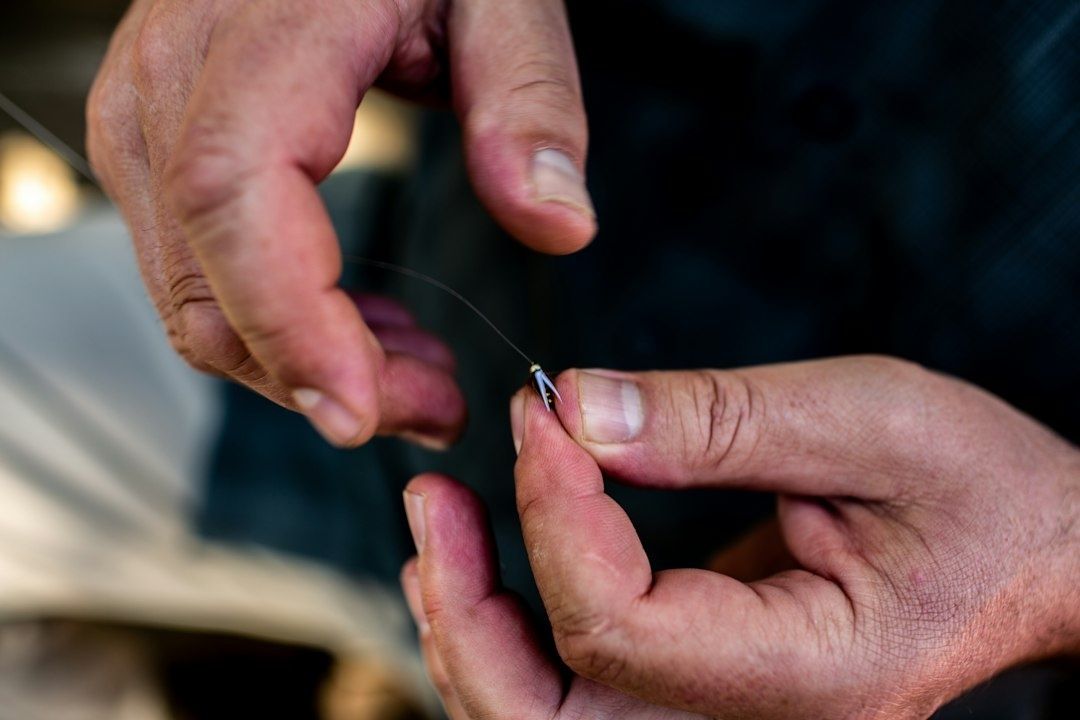
A trophy fish rarely announces the exact moment a leader is about to fail. Along a cold river bend, the water may be running hard from recent rain, the banks may be edged with wet stone and alder roots, and the strike can arrive as a single violent turn of the fish’s head. Then the rod loads, the leader parts cleanly, and the hook comes back without the fish. The immediate suspicion is often a defective spool of line. In practice, the more likely weakness was created earlier, at the terminal connection.
A line rating printed on a packet describes controlled tensile loading, not every force produced by a lunging fish, a snagged lure, current pressure, and a rigid rod acting together. A knot can reduce the usable strength of line, while a fast cinch can create heat, crushing, and microscopic damage before the rig ever reaches the river. Understanding that failure requires attention to three linked mechanisms: friction heat while the knot is tightened, kinetic shock when the system is loaded suddenly, and mechanical shear where tightly compressed turns force one section of polymer against another.
Friction Heat and Microscopic Line Deformation
When monofilament or fluorocarbon is drawn tight, its surfaces do not simply slide harmlessly into place. Each wrap moves against neighboring wraps, and the contact area is small enough for pressure to become intense. If the knot is pulled dry and quickly, friction can generate a localized thermal spike. The heat may last only briefly, but the load is concentrated in a narrow section of line, precisely where the polymer is already being bent and compressed.
That combination can produce deformation that is difficult to see. Synthetic fishing lines are polymer materials, so their strength depends on long molecular chains remaining aligned and continuous. Excessive friction and pressure can stretch a narrow section, producing a phenomenon known as necking. The line becomes thinner at the damaged point, and its ability to distribute load falls. Fluorocarbon is especially unforgiving when sharply bent or cinched unevenly because its relative stiffness can prevent the wraps from settling gradually. A polished-looking knot can therefore contain a weakened zone beneath the surface.
Recent work on polymer strain and friction-related structural change provides useful background for this problem. The research on microscopic polymer deformation concerns synthetic materials rather than a universal fishing-knot test, so it should not be treated as a direct strength table. Its broader lesson is still relevant: extreme local heat and strain can alter polymer structure before visible failure occurs. Water or saliva used during tightening is not a ritual substitute for good technique. It reduces surface temperature, lowers sliding resistance, and helps the wraps settle without scraping one another.
- Dry, rapid cinching can create concentrated friction heat.
- Uneven wraps produce narrow pressure points instead of sharing load across the knot.
- Sharp bends can stretch and thin a polymer section through necking.
- Lubrication helps the knot draw down smoothly and reduces shear during final tightening.
Understanding Line Hold Through the Capstan Principle
A knot holds because its turns convert pulling force into friction and compression. The line entering the knot may carry high tension, while each wrap around another section changes the direction of that force. The more complete the contact around a curved surface, the greater the resistance to movement. This is the same general mechanism seen when a rope is wrapped around a bollard or when a belt grips a pulley.
The relationship is commonly described by the Capstan equation, in which tension changes exponentially with the product of friction and the angle of wrap. A concise explanation is available in this reference on the Capstan equation. For fishing knots, the principle explains why several properly seated turns can hold far better than one sharp bend. It also explains the danger of overconfidence. Additional turns increase holding power, but they can also crowd together, cut into the standing line, and concentrate compression at the entry and exit points.
The practical balance is narrow. If the knot is insufficiently dressed, the wraps may slip and saw against one another. If it is pulled brutally tight, the same wraps may crush the leader’s core or create a permanent kink. Diameter differences make this more pronounced. A supple nylon mainline can flatten and move easily, while dense fluorocarbon resists bending and may force the joining knot into an uneven shape. The objective is not maximum force during tightening. It is a compact, symmetrical seat in which every turn shares load without crossing, riding up, or biting deeply into its neighbor.
Static Pull Versus Sudden Kinetic Shock Loads
A steady pull in a laboratory is useful because it makes line performance repeatable. The machine increases tension gradually until the sample breaks, producing a measured breaking strain. A river fish does not load the system so politely. A powerful headshake can combine the fish’s acceleration, the rod’s recoil, the angle of the line, lure resistance, and the resistance of current. If the leader has little stretch, the rise in force can be abrupt enough to exceed what a static rating suggests.
Material choice changes how that energy is handled. Monofilament is generally more supple and elastic, so it can act as a small shock absorber during sudden movement. Fluorocarbon is denser, more abrasion resistant, less visible underwater, and often more sensitive, but it is typically stiffer and offers less stretch. Braided line has a very high strength-to-diameter ratio and minimal stretch, which improves sensitivity but leaves less elastic reserve when a fish surges. The right leader is therefore a compromise among abrasion resistance, visibility, knot behavior, and the need to moderate impact.
| Material | Typical mechanical character | Practical consequence |
|---|---|---|
| Monofilament | Supple, buoyant, and comparatively elastic | More forgiving during headshakes and sudden runs, with easier knot seating |
| Fluorocarbon | Dense, abrasion resistant, stiff, and lower stretch | Useful around cover and in clear water, but more sensitive to poor dressing and shock |
| Braid | Very low stretch and high strength for diameter | Excellent sensitivity, but little built-in damping when the terminal knot is loaded abruptly |
Climbing systems offer a useful comparison. Nylon climbing rope stretches and absorbs energy, whereas a low-stretch sling behaves much more like a rigid connector. A short, sudden fall onto a static component can create forces that a gradual pull would never reveal. The same principle applies to fishing equipment, although the scales and circumstances differ. A flexible rod, a suitable drag setting, and a leader with appropriate elasticity can spread the event over more time. A locked drag, a rigid connection, and a hard strike can turn a manageable surge into a terminal shock load.
Step by Step Field Guide to Bulletproof Rigging
Reliable rigging begins before the knot is tied. On a cold riverbank, numb fingers encourage hurried movements, and damp tackle can conceal a nick caused by stone, weed, or a previous fish. Check the final section of leader under tension between the fingers, then examine it in good light. If it feels rough, flattened, cloudy, or kinked, cut back to clean material rather than trying to rescue a compromised section.
- Choose line diameters and materials that suit the connection. When joining supple nylon to dense fluorocarbon, avoid forcing a tiny knot to manage a large stiffness mismatch. Use a well-practised joining knot with enough turns for the diameter and application.
- Lay the turns neatly as the knot is formed. Crossed loops and overlapping wraps create isolated pressure points, so pause and dress the knot before applying final tension.
- Lubricate the knot with clean water or saliva before drawing it down. This reduces friction while the wraps slide into position and helps prevent local heating and surface abrasion.
- Pull gradually on the correct tag ends and standing lines. Do not jerk the knot tight. Apply firm, progressive pressure so each turn seats against the next without jumping or cutting across the leader.
- Inspect the finished connection. Look for curling, crossed loops, loose coils, flattened sections, whitening, or a frosted appearance. Any visible damage is a reason to cut and retie.
- Test the knot with a controlled pull before casting. The test should be firm enough to confirm the seat but not an aggressive shock load that damages a connection that was otherwise sound.
Diameter mismatch deserves particular attention when a soft nylon mainline meets a thick fluorocarbon leader. The softer line may form a smooth outer wrap while the stiffer leader resists compression, leaving a gap or a sharp bend at the transition. That gap can close suddenly under load, creating a shock spike. A correctly dressed knot should look compact and orderly, not like a loose bundle that will rearrange itself during the first hard run.
Wetting alone cannot repair poor mechanics. It will not restore a leader that has been nicked, nor will it prevent a badly selected knot from slipping. It is one part of a sequence that includes clean material, appropriate proportions, controlled tightening, and inspection. Resin, adhesive, or a coating may have specialist uses in fly-line loops and repairs, but such treatments should not be assumed to strengthen an ordinary leader knot unless the specific system has been tested for that purpose. The safest field connection remains one that is correctly tied, seated, and replaced when its condition is uncertain.
Casting With Confidence Into Heavy Water
A dependable leader is the result of mechanical balance rather than a single magic knot. Lubrication limits friction heat, careful dressing distributes pressure, and a sensible combination of rod action, drag setting, and line material moderates shock. Abrasion resistance still matters around rock and timber, but a strong leader tied badly can fail before abrasion becomes the deciding factor.
On a cold riverbank, deliberate habits are worth more than hurried confidence. Retie after contact with rough stone, inspect after a hard snag, and allow enough time for fingers to work methodically when the weather turns wet. When the connection is smooth, symmetrical, lubricated, and tested with a controlled pull, the strike can be met with confidence. The river will still provide sudden movement and difficult angles, but the rig will no longer be adding avoidable heat, shear, and shock to the contest.